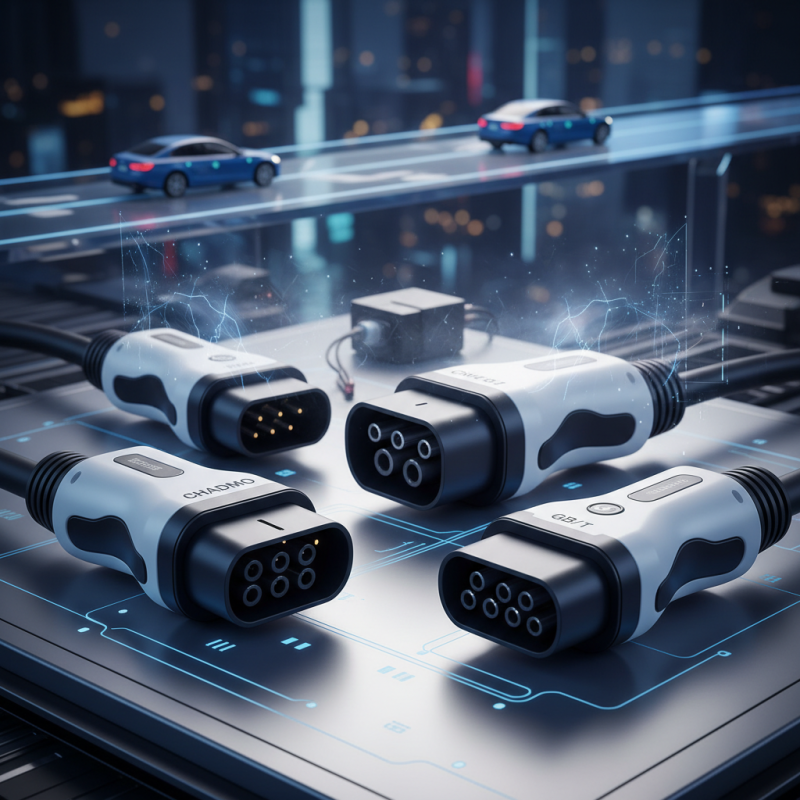
Why Choose the Right DC Charging Connector for Your Needs?
In today's electric vehicle landscape, choosing the right Dc Charging Connector is critical. The connector you select can significantly impact charging efficiency and compatibility. With various types on the market, understanding their functions becomes essential.
DC Charging Connectors vary widely in design and application. Some support faster charging, while others are tailored for specific vehicle models. This nuance can lead to confusion for many users. You might find that what works for one vehicle is inadequate for another.
As electric vehicles advance, so does the technology behind charging connectors. Staying informed can help you make a viable choice. Opting for the correct DC Charging Connector ensures not just convenience but also safety and longevity for your vehicle's battery. Reflecting on your needs and options can lead to better outcomes in your electric driving experience.
Understanding the Importance of DC Charging Connectors in EV Infrastructure
Choosing the right DC charging connector is crucial for efficient EV infrastructure. Each connector has unique specifications that impact charging speed and compatibility. A poorly chosen connector can lead to extended downtime or even damage to the vehicle's battery. Understanding these specifications can make a significant difference in charge time and overall user experience.
The importance of DC charging connectors cannot be overstated. They must accommodate various EV models and adhere to safety standards. Factors like maximum charging power and plug design play roles in usability. For instance, some connectors are designed for fast charging while others prioritize safety. Evaluating these aspects requires both expertise and experience.
There are also challenges in the current charging landscape. Misunderstandings about connector types lead to frustration for users. Many EV owners find themselves at incompatible stations. This problem emphasizes the need for clear communication in the industry. Users should focus on their specific needs and seek professional guidance when selecting connectors.
Key Types of DC Charging Connectors and Their Unique Features
DC charging connectors play a crucial role in the electric vehicle (EV) ecosystem. Understanding their unique features can help users make informed decisions. The two most prominent types are CHAdeMO and CCS (Combined Charging System).
CHAdeMO, developed in Japan, is known for its high-speed charging capabilities. It can deliver up to 62.5 kW. However, its adoption in Europe and North America is less prevalent, which raises concerns about future compatibility.
On the other hand, CCS has gained wide acceptance due to its additional AC charging capability. This connector is designed for fast charging, reaching power levels up to 350 kW. Industry reports from the International Energy Agency indicate that CCS is becoming the global standard, with an expected growth rate of 31% annually. Still, some users struggle with infrastructure intensity as not all locations offer CCS charging stations.
Furthermore, the selection of a charging connector can impact charging speed and vehicle compatibility. EV users must consider their local charging infrastructure. In some regions, availability may be limited, resulting in longer charging times. Investing time in understanding these connectors can lead to a better overall EV experience. Adopting the right DC charging connector is essential to navigate the future of electric mobility efficiently.
Evaluating Compatibility: Connector Standards in the EV Industry
Choosing the right DC charging connector involves careful evaluation of compatibility. The EV industry features several connector standards, each with unique specifications. Understanding these connectors ensures your vehicle can charge efficiently. Many EV owners may overlook this vital aspect. The wrong connector can lead to slow charging or even damage.
The three primary connector types include CCS, CHAdeMO, and Tesla's proprietary system. CCS is widely adopted in North America and Europe. CHAdeMO is more common in Japan. Each standard has different compatibility requirements. This variation can create confusion for consumers. An incompatible connector can result in frustrating experiences at charging stations.
To navigate this complexity, be proactive. Research your vehicle's requirements. Also, consider future needs as the EV landscape evolves. Connector standards may change, impacting your charging options. This evolution can be disconcerting for users, prompting reflection on long-term choices. Compatibility is not just a technical detail; it's crucial for seamless and efficient EV use.
EV Charging Connector Standards Compatibility
Understanding the compatibility of various EV charging connector standards is crucial for ensuring that electric vehicles can be charged seamlessly in different regions. This chart illustrates the number of countries that support different EV charging connectors, indicating their global adoption and relevance in the EV industry.
Assessing Power Levels: Connector Ratings and Their Impact on Charging Speed
Selecting the appropriate DC charging connector is crucial. The power level of connectors greatly influences charging speed. Higher-rated connectors can deliver more power, thus reducing charging time. For instance, connectors rated for 150 kW can charge an electric vehicle (EV) in under 30 minutes. In contrast, those rated for 22 kW may take several hours. This illustrates the impact of connector ratings on overall charging efficiency.
According to the International Energy Agency, the demand for fast-charging solutions has surged. Nearly 60% of EV owners prefer quick charging options. However, not all charging stations offer high-rated connectors. This inconsistency can frustrate users, making it essential to evaluate specific needs before installation. A thorough assessment of the location and usage patterns can help optimize investment in charging infrastructure.
Many consumers misjudge their actual charging speed needs. Some may opt for lower-rated connectors, thinking they will suffice. Yet, as more powerful EV models emerge, this could lead to significant delays. The consequence is clear: a connector that doesn't meet future power demands could render a charging station obsolete. Careful planning is vital to avoid such pitfalls.
Why Choose the Right DC Charging Connector for Your Needs?
| Connector Type | Power Level (kW) | Charging Speed (miles/hour) | Usage Scenario |
| Type 1 | 3.7 kW | 10 miles/hour | Home Charging |
| Type 2 | 22 kW | 60 miles/hour | Public Charging |
| CCS Combo 1 | 50 kW | 130 miles/hour | Fast Charging Stations |
| CCS Combo 2 | 150 kW | 400 miles/hour | Ultra Fast Charging |
| CHAdeMO | 62.5 kW | 150 miles/hour | Fast Charging |
Future Trends in DC Charging Connectors: Innovations and Sustainability Considerations
The landscape of DC charging connectors is evolving rapidly. As electric vehicle (EV) adoption increases, so do the demands for efficient and sustainable charging solutions. A 2021 report by the International Energy Agency indicated that global electric car sales reached 6.65 million units, a substantial increase from previous years. This growth necessitates a focus on the connectors used in DC fast charging stations.
Current trends show a shift toward more innovative connector designs. New standards aim to enhance user experience and reduce charging times. However, the challenge lies in creating connectors that are not only efficient but also sustainable. According to a study from McKinsey, there is a growing emphasis on eco-friendly manufacturing processes in the EV sector. Companies are exploring materials that minimize environmental impact while maintaining performance.
Despite the advancements, several issues need attention. Standardization is still inconsistent among manufacturers, leading to compatibility problems. This fragmentation can confuse consumers and hinder widespread adoption. As the industry pushes for innovations, it is critical to balance performance with sustainability, ensuring that charging connectivity aligns with environmental goals. Stakeholders must reflect on these challenges to build a more unified and sustainable future for DC charging.