How to Choose the Best LED Solar Lights for Outdoor Use?
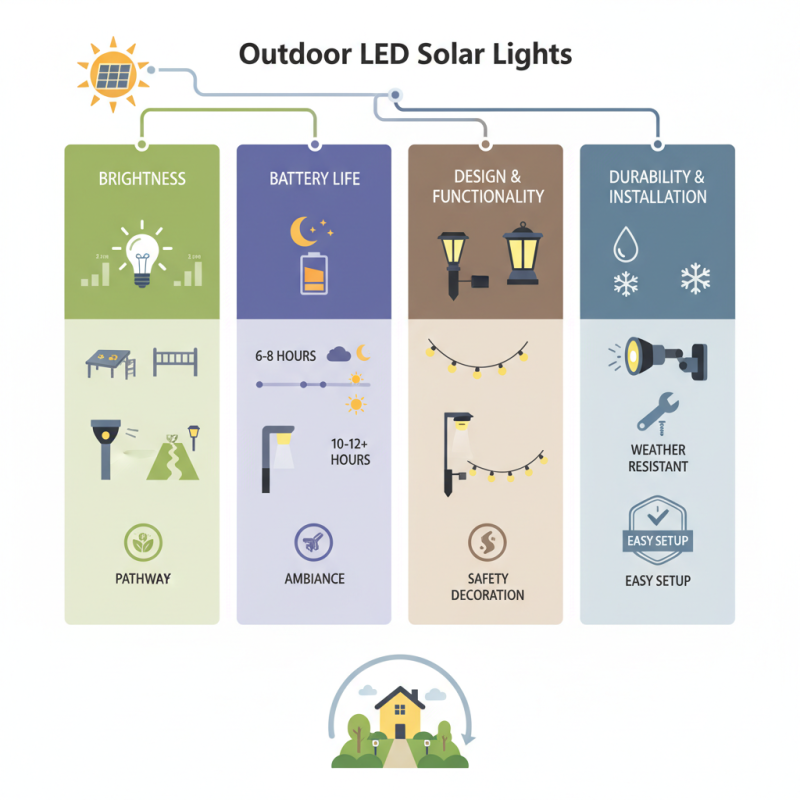
When it comes to illuminating outdoor spaces, LED solar lights outdoor have gained immense popularity due to their energy efficiency and eco-friendliness. Choosing the right set of solar lights can significantly enhance the ambiance of your garden, driveway, or patio while also providing safety and security during the night. With the vast array of options available in the market, selecting the best LED solar lights outdoor requires careful consideration of various factors, including brightness, battery life, design, and functionality.
Understanding the specific needs of your outdoor area is crucial in making an informed decision. For instance, spaces that require higher illumination might need lights with stronger lumens, while decorative areas might benefit more from stylish designs. Additionally, weather resistance and ease of installation are essential features that can affect the overall performance and durability of LED solar lights outdoor. This guide will explore these considerations and provide practical tips to help you navigate the choices available, ensuring you find the perfect lighting solution for your outdoor environment.
Understanding the Basics of LED Solar Lights
LED solar lights have become increasingly popular for outdoor use due to their energy efficiency and environmental benefits. Understanding the basics of these lights is essential for making an informed decision when selecting the right options for your needs. LED stands for Light Emitting Diode, which is a technology that converts electricity directly into light more efficiently than traditional incandescent bulbs. This efficiency not only results in lower energy consumption but also leads to a longer lifespan for the lights, often lasting up to 50,000 hours.
Solar lights, on the other hand, utilize solar panels to capture sunlight during the day and convert it into electricity for illumination at night. This self-sufficiency eliminates the need for wired power sources and reduces electricity bills. When choosing LED solar lights, consider the brightness measured in lumens, the type of solar panel used, and weather resistance ratings to ensure durability. Additionally, look for features like motion sensors and adjustable settings to optimize functionality and security, making your outdoor spaces not only beautiful but also safe and energy-efficient.
Key Features to Consider When Selecting Outdoor Solar Lights
When selecting outdoor solar lights, several key features should be considered to ensure you choose the best option for your needs.
First, look at the brightness level, measured in lumens. For pathways or security lighting, you may need at least 100-200 lumens, while decorative lighting may suffice with lower lumens.
The light’s color temperature also matters; warmer white lights create a cozy atmosphere, while cooler white lights can enhance security with better visibility.
Another crucial aspect is the battery capacity and charging time. High-quality solar lights should have efficient solar panels that charge quickly and batteries with enough capacity to last through the night.
Additionally, consider the durability of the materials used. Since outdoor lights are exposed to the elements, selecting water-resistant and weatherproof options can significantly extend their lifespan.
Lastly, features like motion sensors and adjustable settings can provide added convenience and energy efficiency, making your outdoor space safer and more enjoyable.
Evaluating Brightness and Lumens for Optimal Lighting
When choosing LED solar lights for outdoor use, one of the most critical factors to consider is brightness, often measured in lumens. According to the Illuminating Engineering Society, a brightness level ranging from 100 to 200 lumens is typically adequate for pathway lights, while floodlights can require anywhere from 700 to 1300 lumens for effective illumination of larger areas. This luminance is essential not only for visibility but also for safety, as it can deter potential intruders and reduce accidents in dark spaces.
Furthermore, the efficiency of solar lights greatly impacts their overall performance. A study by the Solar Energy Industries Association indicates that high-quality solar LED lights can produce lumens per watt significantly better than traditional incandescent options. With advancements in solar technology, many modern LED fixtures can achieve over 90 lumens per watt, making them a better choice for energy efficiency and brightness. Evaluating both the lumen output and the efficiency ratings of solar LED lights is crucial in selecting products that will meet your
outdoor lighting needs effectively while also being environmentally friendly.
Battery Life and Efficiency: Choosing the Right Solar Lights
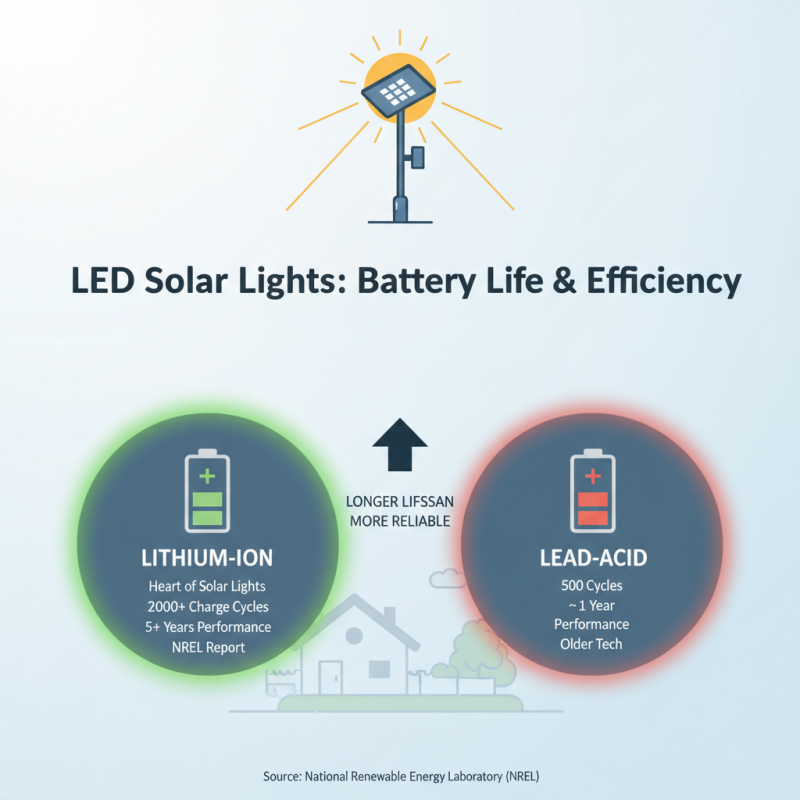
When selecting LED solar lights for outdoor use, understanding battery life and efficiency is crucial. The battery is the heart of solar lights, typically made from lithium-ion or lead-acid. According to a report by the National Renewable Energy Laboratory (NREL), lithium-ion batteries offer significantly longer lifespans, often exceeding 2,000 charge cycles, compared to only about 500 for lead-acid alternatives. This translates to around five years of consistent performance, critical for outdoor environments where reliability matters.
Tips: Look for solar lights that feature high-capacity lithium-ion batteries, as they not only extend the lifespan of the lights but also enhance overall efficiency. Check for products with integrated solar panels that can charge even in lower sunlight conditions—about 15% of daily sunlight exposure is typically sufficient for consistent operation.
Moreover, consider the lumen output in conjunction with battery life. A study by the Solar Energy Industries Association (SEIA) points out that solar lights with a balance of high lumens and efficient energy consumption maximize utility without draining the batteries quickly. For optimal performance, aim for lights that provide at least 100 lumens per watt, ensuring brightness while maintaining battery longevity.
Installation and Maintenance Tips for Long-lasting Use
When selecting LED solar lights for outdoor use, proper installation and maintenance are crucial for ensuring their longevity and effectiveness. Begin by positioning the lights in areas that receive ample sunlight throughout the day, ideally in the south-facing sections of your yard. This maximizes energy absorption, allowing the lights to perform optimally after sunset. Ensure that the solar panels are angled correctly to capture sunlight efficiently, and avoid placing them near obstructions like trees or buildings that may cast shadows.
Regular maintenance is vital for long-lasting performance. Start by keeping the solar panels clean, as dust, leaves, and debris can reduce their efficiency. Use a soft cloth to wipe the panels periodically and ensure there are no obstacles blocking the light's path. Additionally, check the batteries and connections regularly; replace any corroded or malfunctioning components to enhance the overall lifespan of your solar lights. By following these simple installation and maintenance tips, you can enjoy bright, reliable illumination for your outdoor spaces throughout the year.