10 Essential Tips for Choosing the Best Garden Solar Lights for Your Yard
When it comes to enhancing the aesthetic appeal and functionality of your outdoor space, garden solar lights are a fantastic option. Not only do they provide illumination during the night, but they also contribute to energy savings and environmental sustainability. With a wide variety of styles, sizes, and technologies available on the market, selecting the right garden solar lights for your yard can be daunting. This guide aims to simplify your decision-making process by offering essential tips that focus on efficiency, design, and practicality.
As you embark on the journey of choosing the best garden solar lights, it's important to consider factors such as brightness, battery life, and durability. These elements are crucial in ensuring that the lights you select not only serve their purpose but also complement your garden's overall aesthetic. By understanding the characteristics and features that make garden solar lights effective, you will be better equipped to create a beautifully illuminated landscape that enhances your outdoor living experience.
Key Factors to Consider When Selecting Garden Solar Lights
When selecting garden solar lights, there are several key factors that can significantly impact performance and satisfaction. The first consideration is lumens, which measure the brightness of the light. According to a report by the International Dark-Sky Association, a lumens range of 100 to 200 is generally sufficient for pathway lighting, while areas requiring more visibility could benefit from lights offering 300 lumens or more. This ensures that your garden not only looks aesthetically pleasing but also remains safe and functional at night.
Another critical factor is the quality of solar panels. Reports indicate that solar lights equipped with high-efficiency panels can convert up to 22% of sunlight into energy, significantly enhancing their performance even on cloudy days. Look for models that utilize monocrystalline solar cells, as they tend to have a higher energy conversion efficiency compared to polycrystalline options. Additionally, consider the battery capacity; larger batteries can store more energy, extending the operation time of the lights after sunset. According to research from the Solar Energy Industries Association, a robust battery can help maintain illumination for up to 12 hours, making it an essential aspect to evaluate when choosing solar lighting for your garden.
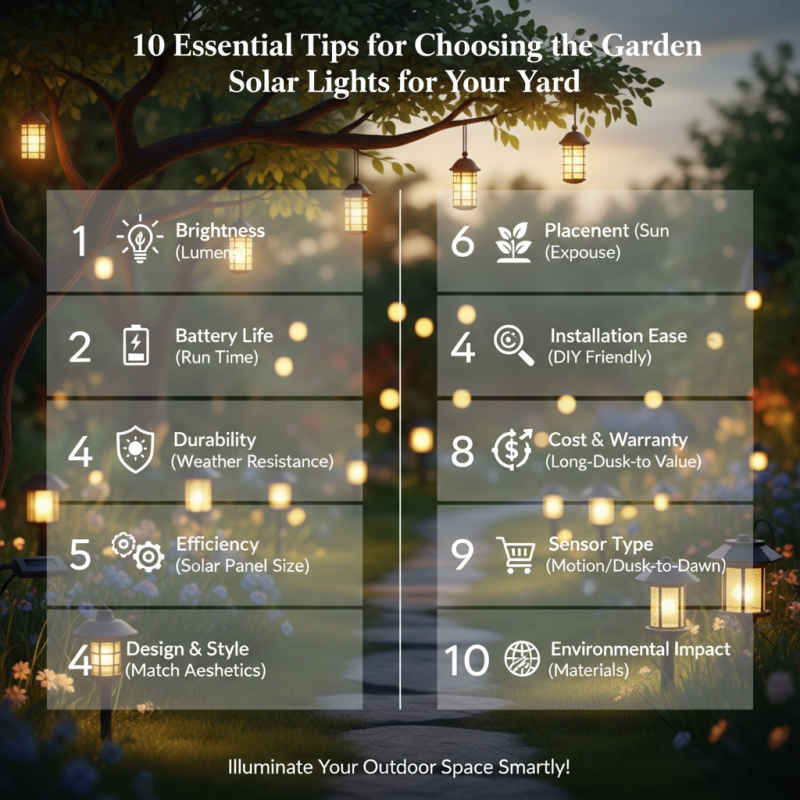
10 Essential Tips for Choosing the Best Garden Solar Lights for Your Yard
| Tip |
Description |
Key Factor |
| 1. Assess Your Lighting Needs |
Determine which areas require illumination and for what purpose. |
Brightness |
| 2. Check Battery Quality |
Opt for solar lights with high-quality rechargeable batteries for longer usage. |
Battery Life |
| 3. Consider Light Duration |
Choose solar lights that can last throughout the night. |
Run Time |
| 4. Evaluate Weather Resistance |
Select models that are designed to withstand various weather conditions. |
Durability |
| 5. Look for Motion Sensors |
Enhance security with solar lights that include motion detection. |
Security Features |
| 6. Choose the Right Design |
Select styles that complement your garden aesthetics. |
Aesthetic Appeal |
| 7. Consider Installation Ease |
Opt for lights that are simple to set up and require no wiring. |
Ease of Use |
| 8. Assess Solar Panel Efficiency |
Choose lights with high-efficiency solar panels for better charging. |
Charging Performance |
| 9. Check for Adjustable Features |
Lights with adjustable brightness and angles provide versatility. |
Flexibility |
| 10. Read Customer Reviews |
Gather insights from other users on performance and longevity. |
User Experience |
Understanding the Different Types of Solar Lights Available
When selecting the best garden solar lights for your yard, understanding the different types available is crucial. Solar lights are typically categorized into several varieties, each designed to serve specific functions while enhancing the aesthetics of your outdoor space.
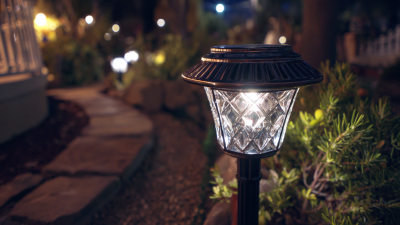
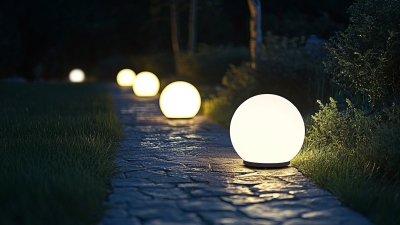
Pathway lights are among the most common, providing illumination along walkways and driveways, effectively guiding guests while adding a decorative touch. These lights often come with a stake for easy installation, allowing them to be positioned wherever they are needed most.
Another popular option is spotlight-style solar lights, which provide focused lighting for highlighting specific features in your garden, such as sculptures, trees, or flower beds.
These lights can be adjusted to shine in the desired direction and are ideal for creating a dramatic effect after sunset.
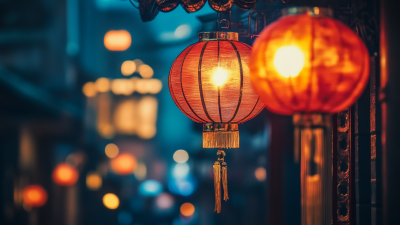
Additionally, decorative solar lights, including lanterns and string lights, are perfect for adding ambiance to outdoor gatherings. They create a warm, inviting atmosphere that enhances the enjoyment of your yard during the evening. Understanding these different types will help you choose solar lights that not only meet your functional needs but also complement the overall design of your garden.
Evaluating Brightness: Lumens and Their Impact on Garden Aesthetics
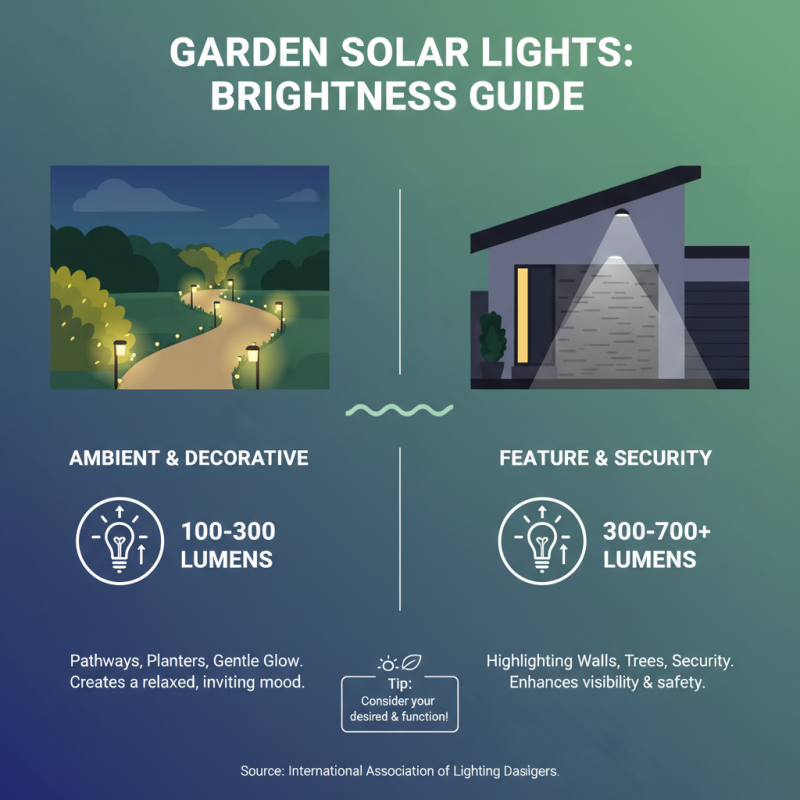
When selecting garden solar lights, evaluating brightness is crucial for achieving desired aesthetics. Brightness in lighting is typically measured in lumens, and understanding how this metric affects your garden landscape can help you create the perfect ambiance. According to the International Association of Lighting Designers, ambient lighting typically ranges from 100 to 300 lumens per fixture, ideal for pathways and decorative purposes. In contrast, architectural features or security lighting may require up to 700 lumens to ensure visibility without causing discomfort.
It’s essential to match your garden’s lighting needs with the appropriate lumen output. For instance, if you are illuminating a large outdoor area or a garden filled with dense foliage, using lights with higher lumen levels (around 500-800 lumens) can produce a more dramatic effect that enhances depth and visual interest. Conversely, for softer illumination that promotes relaxation, lower lumens (around 200-400) can set a tranquil atmosphere without overwhelming the senses. According to research from the National Renewable Energy Laboratory, thoughtful placement and lumen selection can significantly enhance outdoor aesthetics, making your garden not only functional but also an inviting space for gatherings during the evening.
Battery Life and Solar Panel Efficiency: What You Need to Know
When choosing the best garden solar lights for your yard, understanding battery life and solar panel efficiency is crucial. According to the Solar Energy Industries Association (SEIA), the efficiency of solar panels can significantly influence how well your lights perform. Most residential solar lights utilize either monocrystalline or polycrystalline solar panels, with monocrystalline panels generally offering higher efficiency rates of up to 20%. This means they can convert more sunlight into usable energy, which leads to extended battery life and improved performance during cloudy days or winter months.
When selecting solar lights, consider the battery capacity as well. Lithium-ion batteries, which are commonly used in high-quality solar lights, can store more energy than traditional nickel-cadmium batteries. For instance, while a nickel-cadmium battery might offer about 600 charge cycles, lithium-ion options can last for more than 2,000 cycles, ensuring longevity and consistent light output.
Tip 1: Look for products that feature solar panels with at least 15% efficiency to ensure they can harness enough energy throughout the day. Tip 2: Check the battery capacity (measured in milliamp hours, or mAh); a higher mAh indicates a longer-lasting power supply for your lights. Investing time in assessing these features will help you enjoy a beautifully illuminated garden without frequent replacements or disappointments.
Cost vs. Quality: Investing in Long-Lasting Solar Lighting Solutions
When selecting solar lights for your garden, the debate between cost and quality is crucial. While a lower price might be appealing, it’s important to consider the longevity and performance of the products you choose. Cheaper solar lights often come with inferior materials and components, leading to reduced brightness, shorter operational lifespans, and a higher likelihood of malfunctioning. Investing a bit more upfront in sturdier, higher-quality options can save you money in the long run, as you will not need to frequently replace them.
Moreover, high-quality solar lights typically feature better solar panels and batteries, ensuring they absorb more sunlight and provide consistent illumination throughout the night. By focusing on durable and efficient lighting solutions, you enhance not only the aesthetic appeal of your yard but also its safety and usability after dark. In essence, prioritizing quality over cost when buying solar lights can yield better performance and reliability, ultimately transforming your outdoor space into a beautifully lit haven for years to come.