2026 How to Choose Indoor Solar Lights for Any Space?

In 2026, indoor solar lights are becoming more practical for homes, apartments, studios, and emergency spaces. They can brighten a hallway, reading corner, bathroom, or windowless shelf without adding another outlet. However, choosing the right model involves more than checking brightness or appearance.

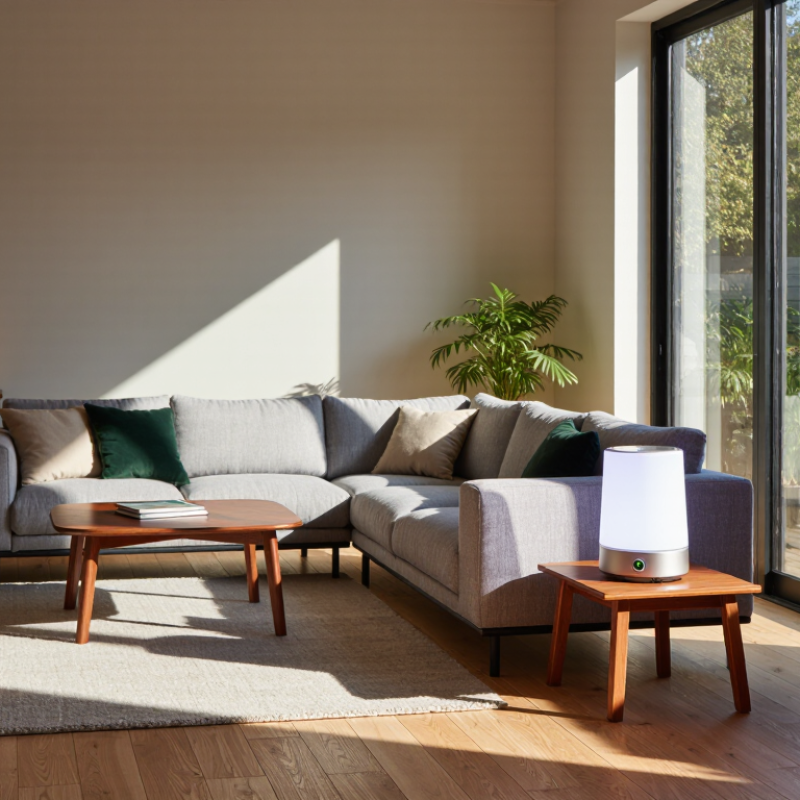
Real-world performance depends on panel placement, indoor light levels, battery capacity, and daily usage. A lamp near a bright south-facing window may recharge differently from one placed beside a shaded bookshelf. Small choices matter. During product evaluation, check the light’s measured brightness, charging time, battery type, color temperature, and control options. A warm 2700K tone suits bedrooms, while neutral white light often works better for desks and kitchens.

This guide explains how to compare indoor solar lights for different spaces in 2026. It considers room size, task requirements, installation limits, maintenance, and long-term reliability. Look for clear specifications and realistic runtime claims. Marketing language can sound impressive, but actual performance may vary indoors. Solar is not magic. A small panel cannot fully replace strong daylight, especially during cloudy seasons or in rooms with limited windows. That limitation deserves attention.

The recommendations focus on safe household use, sensible energy expectations, and practical placement. Some compromises are unavoidable. A compact light may look elegant but provide less illumination. A brighter unit may require more frequent charging. By understanding these trade-offs, readers can select indoor solar lights that feel useful every evening, not merely attractive in a product photo.
2026 How to Choose Indoor Solar Lights for Any Space?

Define Space Needs with IES Recommended Illuminance Levels in Lux

Choosing indoor solar lights starts with the space, not the fixture. IES guidance uses illuminance, measured in lux, to match light with visual tasks. A hallway may need about 50–100 lux, while a living area often benefits from 100–200 lux. Reading, food preparation, and desk work usually require around 300–500 lux at the task surface.

Measure where light is used. Place a lux meter on the kitchen counter, desk, or floor, rather than near the ceiling. A dark wall can absorb light, while glossy surfaces may create glare.

Solar-powered indoor lights also depend on stored energy, so compare their usable brightness with evening operating hours. A light rated for 400 lux may not maintain that level after several cloudy days.

I once focused too much on lamp brightness and ignored shadow placement. That was a practical mistake.

A brighter fixture cannot fully correct poor positioning. Use several modest lights when one source leaves corners dim. Keep reading lights near the page, but avoid placing them directly behind your head. IES recommendations are useful planning references, not rigid rules for every home. Older occupants, dark finishes, and reduced eyesight may justify higher levels. Recheck the room after installation. Your first estimate may be wrong.
Estimate Solar Input Using 15–23% PV Module Efficiency Data from NREL

2026 How to Choose Indoor Solar Lights for Any Space?

Estimate Solar Input Using 15–23% PV Module Efficiency Data from NREL

Choosing an indoor solar light starts with available solar input, not brightness claims. NREL’s photovoltaic benchmark reports commonly place commercial module efficiency near 15–23%. Use that range for a realistic first estimate. A 0.08-square-meter panel receiving 100 watts per square meter provides about 8 watts of sunlight. At 20% efficiency, it produces roughly 1.6 watts before wiring, battery, and charging losses. Real output may be lower.

Glass, curtains, dust, and window direction reduce the result. The International Energy Agency Photovoltaic Power Systems Programme reports that orientation and shading strongly affect annual photovoltaic yield. Measure the panel area and record light exposure across several hours. Then use this formula: area × solar irradiance × efficiency × system factor. A practical system factor is 0.6–0.8, although small indoor products can perform worse. I would not trust one bright afternoon. It can mislead.

Tips: Place the panel near a clear, south-facing window in the Northern Hemisphere, but avoid constant heat. For a dim hallway, prioritize battery capacity and low standby consumption. For a desk, check charging time under cloudy conditions. Lux readings help compare locations, but they do not equal solar irradiance. Spectrum matters. This is an imperfect estimate, yet repeated measurements usually beat optimistic packaging figures.

Match LED Brightness to 80–200 lm/W Efficacy Benchmarks from the DOE

Choosing Indoor Solar Lights for Any Space in 2026

Indoor solar lights need more than attractive housing and a bright first impression. Match their LED output to the room’s actual purpose. A hallway may work with 100–200 lumens, while a reading corner needs steadier, more focused light. Check the product’s measured lumen rating, not only wattage. Lumens describe visible output; watts describe energy use.

The U.S. Department of Energy uses LED efficacy benchmarks that commonly range from about 80 to 200 lumens per watt. Treat this range as a useful screening guide, not a promise of performance. A 1,000-lumen light producing 100 lumens per watt uses roughly 10 watts under test conditions. Real indoor solar products may deliver less because of battery losses, panel size, charging time, temperature, and diffuser design.

Look closely at daily charging conditions. A small panel near a shaded window may not restore enough energy for long evening use. I once judged a lamp by its bright showroom setting and overlooked its dim late-night mode. That was a practical mistake. Ask for runtime at the selected brightness, battery capacity, and charging requirements. For desks, compare beam spread and glare. For stairs, prioritize consistent low-level illumination. For larger rooms, several efficient lights may feel better than one powerful unit. Measure the space if possible. Human comfort is easy to underestimate.

Compare Battery Runtime, Capacity, and Cycle Life Under IEC 61960

Choosing indoor solar lights starts with the battery, not the brightness label. Under IEC 61960, lithium battery capacity is measured under defined discharge conditions. That detail matters. A 2,000 mAh cell does not automatically provide longer lighting than a 1,500 mAh cell. Voltage, discharge rate, temperature, and usable capacity all affect runtime.

For a practical estimate, multiply battery voltage by ampere-hours to find watt-hours. Then divide usable watt-hours by the lamp’s power demand. A 3 Wh battery running a 0.3 W lamp may deliver about ten hours in ideal conditions. Real indoor charging is weaker, especially near shaded windows. Charging losses and aging reduce that figure. Check whether the datasheet states rated capacity, test temperature, and discharge cutoff.

Cycle life deserves equal attention. IEC 61960 testing can indicate how capacity changes after repeated charge and discharge cycles. However, the result may not match your room. A light used every night may age differently from one used occasionally. Look for the remaining-capacity threshold, such as 80 percent, and the tested cycle count. Ask one uncomfortable question: was the test performed on the complete light or only the battery? A strong battery can still perform poorly with a small panel or inefficient circuit. Small details matter. Test the lamp beside your intended window for several evenings before installation. Expect variation. That is more honest than trusting one impressive number.

Verify Fixture Safety and Ingress Protection Under IEC 60598-1 and IP Codes

Choosing indoor solar lights begins with fixture safety, not brightness.
IEC 60598-1 covers essential luminaire requirements, including insulation, wiring, temperature rise, mechanical strength, and protection from electric shock. A compliant-looking housing is not proof of compliance. Ask for a test report, rated voltage, battery details, and clear installation instructions.

IP codes add another layer.
IEC 60529 defines the first digit for solid-particle protection and the second for water protection. IP20 suits dry rooms, while IP44 offers protection against objects larger than one millimeter and splashing water. Neither rating confirms battery quality or fire resistance. The U.S. Department of Energy reports that LED lighting can use at least 75% less energy than incandescent lighting, but efficient light still needs safe thermal design. Small spaces can trap heat.

Tips:
Check the label near the battery compartment. Look for input limits, operating temperature, and replacement guidance. Avoid fixtures with loose cables, sharp edges, swollen cells, or vague test claims. In a bathroom, balcony, or kitchen, match the IP rating to actual exposure, not marketing language. I would also inspect the solar panel cable after bending it gently. This simple check is imperfect, yet useful. Remember that IP testing reflects defined laboratory conditions, not every home situation. A fixture may pass testing but fail after poor mounting, blocked ventilation, or aging seals. The International Energy Agency continues to identify lighting efficiency as an important energy-saving opportunity, but safety remains the first filter.