How to Identify Muscovite Mica in Your Geology Collection?
muscovite mica is a captivating mineral often found in geology collections. It exhibits a shiny, reflective surface, making it visually distinctive. According to the United States Geological Survey (USGS), muscovite is commonly used in various industries. Its applications range from electronics to cosmetics, highlighting its versatility.
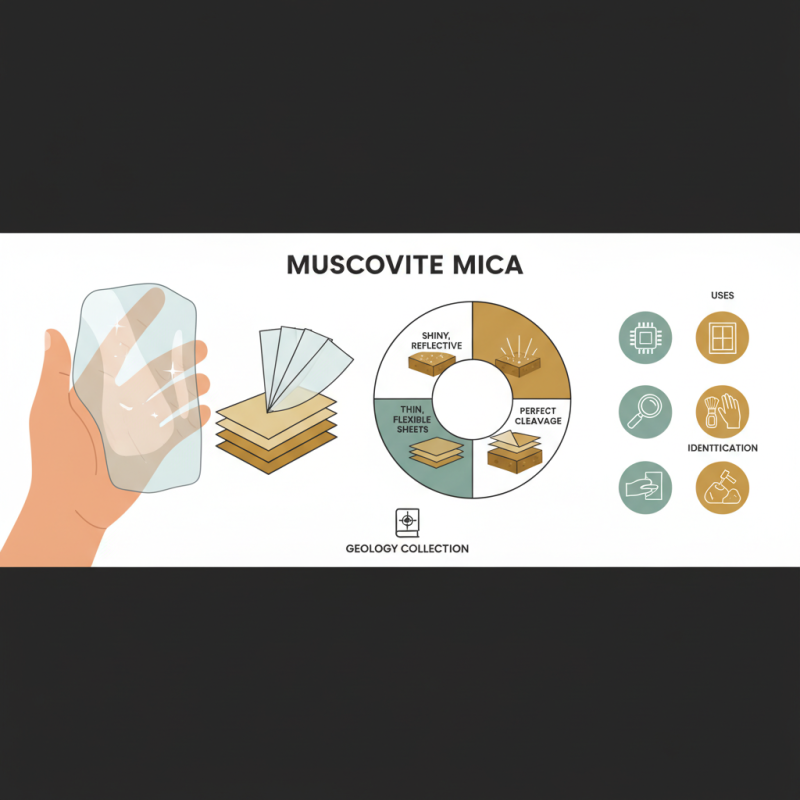
To identify muscovite mica, one must examine specific features and properties. This mineral typically appears as thin, flexible sheets. It is known for its perfect cleavage, allowing for easy separation into thin layers. While the identification process is straightforward, amateur collectors sometimes confuse muscovite with other mica varieties. Such mix-ups may lead to inaccuracies in collection documentation.
The importance of accurate identification cannot be overstated. Misidentifying muscovite mica can diminish the scientific value of a collection. Many geological reports emphasize the necessity of proper mineral classification. Therefore, aspiring geologists should pay close attention to the unique characteristics of muscovite mica. This not only improves their collection but also fosters a deeper understanding of geology.
Characteristics of Muscovite Mica in Rocks and Minerals
Muscovite mica is a vital mineral in geology. It often appears in metamorphic rocks. This mineral can be recognized by its distinct characteristics. Muscovite typically exhibits a layered structure, allowing it to split into thin, flexible sheets. These sheets can be transparent or translucent, often displaying a shiny, glass-like luster.
In hand specimen, muscovite usually appears colorless to light brown. The color may vary due to impurities within the mineral. For example, studies indicate that iron content can impart a slight greenish tint. A key characteristic is its hardness on the Mohs scale, which ranges from 2.5 to 3. It is softer than quartz, making it easily scratched.
Identifying muscovite can also involve examining its cleavage. The mineral has perfect cleavage in one direction, leading to smooth, flat surfaces. This feature is crucial for distinguishing it from similar minerals. While some minerals share a glossy appearance, muscovite's distinctive layering sets it apart. However, inexperienced collectors may confuse it with biotite, which is darker and has a different cleavage pattern. Collectors should take time to study these characteristics closely.
Characteristics of Muscovite Mica in Rocks and Minerals
Visual Identification Techniques for Muscovite Mica
Identifying muscovite mica can be a rewarding experience for any geology enthusiast. This mineral often appears in thin, transparent sheets. Its color typically ranges from colorless to pale shades, including green and brown. When light hits muscovite, it exhibits a pearly luster. Hold it up to a light source, and you might notice how it transforms.
Texture is another key feature. Muscovite sheets can curl at the edges, making them look delicate. They feel smooth and can bend slightly without breaking. Examining the cleavage is important too. Muscovite has perfect cleavage in one direction, allowing it to split into thin layers. This characteristic sets it apart from other minerals.
Fieldwork is a different story. You may find muscovite among feldspar in granite or schist formations. Testing in natural light is useful. Don’t underestimate the importance of context. Muscovite often accompanies other minerals. This can make identification tricky. Sometimes, it may look like other micas. Practice is vital. As you refine your skills, imperfections become learning moments. Ultimately, getting familiar with these visual techniques will enhance your geology collection.
How to Identify Muscovite Mica in Your Geology Collection? - Visual Identification Techniques for Muscovite Mica
| Characteristic | Description | Identification Technique |
| Color | Typically light brown to colorless, sometimes green or yellow. | Observing the color under natural light and contrasting it with other minerals. |
| Luster | Vitreous to pearly, gives a shiny appearance. | Observe the surface sheen when held in light. |
| Cleavage | Perfect cleavage in one direction, flakes easily. | Gently applying pressure to determine smooth separation of flakes. |
| Hardness | Mohs hardness of 2-2.5, very soft. | Testing with a fingernail to observe scratchability. |
| Texture | Sheet-like and flexible, can bend without breaking. | Gently bending a piece to test its flexibility. |
Common Locations to Find Muscovite Mica
Muscovite mica is a common mineral found worldwide. Many geology enthusiasts seek it for collections. If you're searching for Muscovite, specific locations are more promising than others.
In the United States, Muscovite is often found in areas like New Hampshire, Vermont, and the Appalachian Mountains. These regions are rich in granitic rocks, where Muscovite often forms. A study highlighted that nearly 70% of mica products in North America originate from these locations. The mineral may also be found in pegmatites, which are coarse-grained igneous rocks. These areas can yield large specimens, some exceeding 10 inches.
Tips: When searching, bring a field guide. Use a magnifying glass to inspect shiny surfaces. Look for thin sheets that can be peeled off. Remember, the best time to explore is after rain, which can reveal fresh mica layers.
In countries like Brazil and India, Muscovite is abundant as well. Both countries produce significant quantities of mica for various industries. Unfortunately, mining practices can impact local environments. This raises ethical concerns for collectors. Seek sustainable sourcing to mitigate harm to nature while enjoying the hobby.
Testing Methods to Confirm Muscovite Mica Presence
When identifying muscovite mica in your geology collection, confirming its presence is crucial. One effective method is to test its cleavage. Muscovite has a perfect basal cleavage that allows it to easily split into thin, flexible sheets. Gently apply pressure with your finger. If you observe a clean, thin layer separating, you likely have muscovite.
Another method involves examining the color and transparency. Muscovite generally ranges from colorless to light brown or green. Hold the specimen up to the light. Does it transmit light? This transparency can indicate that you are dealing with muscovite. Yet, don't rely solely on color. Other micas share similar hues, so this method needs careful consideration.
Finally, you might want to conduct a mineral hardness test. Muscovite ranks around 2.5 to 3 on the Mohs scale. Use a fingernail or metal object to scratch the surface. If it leaves a mark, it may not be muscovite. However, this test can also be tricky due to the specimen's condition. Dust and surface layers can interfere with your results. Pay attention to these details during your evaluation.
Tips for Properly Storing and Displaying Muscovite Mica Samples
Storing and displaying Muscovite mica samples requires careful consideration. First, choose a cool and dry environment. High humidity can lead to the deterioration of this mineral. The ideal humidity level is around 40% to 50%. Continuous exposure to moisture can cause the mica to lose its luster and integrity.
Use archival-quality boxes or trays for storage. Avoid plastic containers as they can trap moisture. Instead, opt for materials that allow airflow. Each mica piece should be separated to prevent scratching. When displaying, use UV-filtering glass to protect against harmful light. Experts recommend keeping displays away from direct sunlight. Ultraviolet rays can fade and damage the mineral over time.
Label your samples clearly but succinctly. Include information about the specimen's origin and characteristics. This adds value and context. Consider sharing your collection with fellow enthusiasts or on educational platforms. However, remember to assess the conditions in which your samples are shared. Informal settings can lead to neglect and damage. Balancing display and preservation is a constant challenge for collectors.