10 Best Solar Lights Outdoor for Wholesale Buyers?

Choosing the best solar lights outdoor products for wholesale requires more than comparing brightness and low prices. Buyers must examine real performance, supplier consistency, and installation conditions.

Professor Martin Green, a leading solar-cell researcher, has said, “The sun is an inexhaustible source of energy.” That principle matters here. A reliable outdoor light should convert available sunlight efficiently, store energy safely, and deliver useful illumination after sunset. Product samples should be tested in realistic settings, not only in showroom conditions. Place one beside a garden path, another near a warehouse entrance, and observe performance after cloudy weather.

Details reveal quality. Check the solar panel size, battery chemistry, charging time, lumen output, waterproof rating, and motion-sensor response. A light that claims twelve hours of operation may perform differently during winter or in shaded courtyards. Ask suppliers for test reports, replacement-part policies, packaging specifications, and documented quality-control procedures. These records support more dependable wholesale decisions.

The “best” choice is not always the brightest model. Excessive brightness can create glare and increase customer complaints. Lower-cost housings may also fade, crack, or collect moisture around the switch. I have seen attractive samples fail after repeated rain exposure. That is an uncomfortable reminder: appearance can mislead.

This guide evaluates ten solar lights outdoor options through practical wholesale criteria, including durability, energy performance, installation flexibility, and long-term value. Some rankings may change by climate and project type. That uncertainty deserves attention, because responsible purchasing depends on evidence, not confident claims.
10 Best Solar Lights Outdoor for Wholesale Buyers?

What Wholesale Buyers Should Know About Outdoor Solar Lights

What Wholesale Buyers Should Know About Outdoor Solar Lights

Wholesale buyers should judge outdoor solar lights by measured performance, not bright packaging claims. IRENA’s Renewable Capacity Statistics 2024 reports 346 gigawatts of new solar capacity added globally in 2023. This growth supports wider component availability, but it does not guarantee consistent product quality. Ask suppliers for battery capacity, LED output, charging time, and tested runtime. A light that claims eight hours may deliver less during cloudy seasons.

Battery choice matters. Lithium-based batteries usually offer better cycle life than basic rechargeable cells, but cold weather and heat still reduce performance. The U.S. Department of Energy states that LEDs use up to 75% less energy than incandescent lighting and can last 25 times longer. For wholesale orders, confirm the LED specification and request test samples. Small details matter, such as a sealed cable joint or a panel that tilts toward midday sun.

Outdoor durability needs clearer evidence. Check the stated IP rating under IEC 60529, especially for products placed near gardens, paths, or coastal areas. I have seen attractive samples fail after water entered the switch housing. That mistake is expensive. Buyers should compare warranty terms, replacement batteries, carton protection, and spare-part availability. Bulk pricing is useful, but unreliable runtime creates returns, complaints, and wasted freight.

Testing ten samples is wiser than trusting one perfect unit.
Key Features That Define High-Quality Solar Lighting Products

10 Best Solar Lights Outdoor for Wholesale Buyers?

For wholesale buyers, high-quality solar lighting starts with measurable performance, not attractive packaging. Check the panel’s conversion efficiency and charging behavior under weak sunlight. A reliable unit should provide steady illumination after cloudy days. Battery capacity matters, but battery quality matters more. Lithium-based cells often support longer charge cycles and more consistent nighttime output. Ask for test data, not only printed claims.

Inspect the construction closely. A strong housing should resist rain, dust, and repeated temperature changes. Look for a clear IP rating and sealed cable connections. The lens should spread light evenly without harsh dark spots. Useful features include adjustable brightness, motion sensing, timer control, and selectable color temperature. Small details matter. A loose switch can create costly returns.

Before placing a large order, test samples outdoors for several nights. Measure brightness after six, eight, and ten hours. Compare results across different weather conditions. I have seen products perform well in showroom lighting but weaken quickly outdoors. That weakness is easy to miss. It is also expensive. Request documentation for safety testing, battery specifications, warranty terms, and replacement components. Packaging should protect panels and sensors during international transport. Some buyers focus heavily on price and overlook installation time. That can be a mistake. A slightly higher unit cost may reduce service calls, damaged shipments, and customer complaints. No product is perfect, so suppliers should explain limitations honestly.

10 Best Solar Lights Outdoor for Wholesale Buyers? - Key Features That Define High-Quality Solar Lighting Products

Rank Solar Light Type Recommended Use Solar Panel Battery Light Output Typical Runtime Weather Protection Motion Sensor Color Temperature Housing Materials Key Wholesale Quality Indicators
1 Solar Wall Light Entrances, patios, garages and walkways 3 W monocrystalline 3.7 V 2,200 mAh lithium-ion Up to 800 lm 8–12 hours IP65 Yes; approximately 120° detection angle 3,000–6,500 K UV-resistant ABS and polycarbonate lens High-impact housing, replaceable battery access and reliable PIR switching
2 Solar Pathway Light Garden borders, driveways and pedestrian paths 0.3 W monocrystalline or amorphous 1.2 V 600 mAh Ni-MH 15–30 lm 8–10 hours IP44 or higher No 2,700–3,000 K Stainless steel or weather-resistant ABS with polycarbonate diffuser Stable ground stake, corrosion-resistant finish and sealed battery compartment
3 Solar Floodlight Yards, signs, building facades and security areas 6 W monocrystalline 3.2 V 4,000 mAh LiFePO4 Up to 1,200 lm 10–12 hours IP66 Yes; adjustable detection range 4,000–6,500 K Powder-coated aluminum and tempered or polycarbonate lens Adjustable mounting bracket, separate solar panel option and thermal protection
4 All-in-One Solar Street Light Roads, parking lots, campuses and commercial sites 20 W monocrystalline 12.8 V 12 Ah LiFePO4 Up to 2,500 lm 10–12 hours per night IP66 Optional microwave or PIR sensor 4,000–6,500 K Die-cast aluminum, tempered glass and stainless-steel hardware Dusk-to-dawn control, programmable dimming, surge protection and replaceable battery
5 Solar Garden Spotlight Trees, landscaping, flagpoles and architectural features 1.5 W monocrystalline 3.7 V 1,800 mAh lithium-ion Up to 250 lm 8–10 hours IP65 No 3,000–6,500 K Aluminum or ABS body with adjustable polycarbonate head Adjustable beam angle, detachable stake and consistent LED color
6 Solar String Lights Balconies, events, restaurants and outdoor décor 1–3 W monocrystalline 3.7 V 1,200–2,200 mAh lithium-ion 80–150 lm total 8–12 hours IP65 for outdoor-rated sets No 2,700–3,000 K or multicolor PVC-insulated cable, ABS controller and sealed LED housings Flexible cable, secure bulb spacing, multiple lighting modes and waterproof connectors
7 Solar Post Lantern Fences, entrance posts, decks and boundary walls 2 W monocrystalline 3.7 V 2,000 mAh lithium-ion Up to 300 lm 8–12 hours IP54–IP65 No 2,700–3,000 K Aluminum, stainless steel and clear polycarbonate panels Standard mounting dimensions, corrosion resistance and secure top cover
8 Dual-Head Solar Security Light Garages, side yards, warehouses and entrances 5 W monocrystalline 3.7 V 3,000 mAh lithium-ion Up to 1,000 lm Up to 10 hours in low-power mode IP65 Yes; adjustable PIR sensor 5,000–6,500 K UV-resistant ABS and polycarbonate lens Wide illumination coverage, independent light-head adjustment and test switch
9 Solar Floating Pool Light Pools, ponds, fountains and temporary events 0.5 W monocrystalline 3.7 V 1,200 mAh lithium-ion 30–60 lm 8–10 hours IP68 for floating use No 2,700–6,500 K or RGB Sealed ABS body and polycarbonate diffuser Buoyant design, sealed charging compartment and tested water resistance
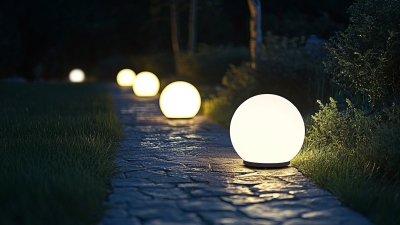
10 Solar Bollard Light Commercial gardens, parks, resorts and pathways 2.5 W monocrystalline 3.7 V 2,600 mAh lithium-ion Up to 350 lm 8–12 hours IP65 Optional 2,700–4,000 K Powder-coated aluminum and UV-stabilized polycarbonate Stable base, anti-corrosion coating, replaceable battery and uniform light distribution

Note: Specifications are representative wholesale reference values for outdoor solar lighting categories. Actual performance depends on solar irradiance, installation angle, temperature, battery condition and operating mode.

10 Best Types of Outdoor Solar Lights for Wholesale Purchasing

For wholesale buyers, the best outdoor solar lights are not one universal product. They serve different spaces, budgets, and installation habits.

A practical shortlist includes pathway lights for garden edges, bollard lights for walkways, and floodlights for broad security coverage.

Wall-mounted lights suit entrances, while string lights work well for patios or event areas.

Each type needs a different balance of brightness, battery capacity, weather resistance, and carton protection. A low price means little if cracked lenses arrive.

Spotlights suit trees and signs, while motion-sensor security lights reduce wasted nighttime energy. Post-cap lights refresh fence posts, lantern-style lights add portable atmosphere, and step or deck lights improve visibility on stairs.

During product checks, I examine charging consistency, mounting stability, instructions, and replaceable components.

Test samples carefully. One sample is not enough.

Wholesale evaluation should match the target market.

Coastal buyers may need stronger corrosion protection, while cold regions require batteries that perform reliably at low temperatures.

Review lumen claims under realistic conditions, not only showroom darkness.

Check packaging drop resistance and confirm the stated IP rating through credible documentation. Compare warranty terms, spare-part access, lead times, and customization options.

Some decorative models look attractive but produce weak light. That trade-off deserves an honest note in the buying plan.

How to Compare Solar Light Performance, Durability, and Cost

Wholesale solar lights should be compared as complete systems, not by wattage claims. The U.S. Department of Energy’s 2023 solid-state lighting research reports leading LED packages above 200 lumens per watt in laboratory conditions. Outdoor fixtures deliver less after optics, heat, wiring, and battery losses. Request tested lumens, not LED-chip wattage. Measure illumination at ground level. A bright center with dark edges creates complaints.

VeraSol Quality Standards use controlled tests for light output, operating time, battery performance, and durability. Ask suppliers for comparable test conditions. Check the claimed runtime after a cloudy day, not only after full sunlight. IP65 protection is useful for dust and water jets, but it does not prove long-term sealing. NREL field research often reports about 0.5% annual degradation for crystalline-silicon modules. Do not transfer that figure to batteries. Battery aging is usually the weak point. I have seen attractive samples lose brightness before the second winter.

Compare cost per useful lighting hour. Divide landed cost by expected operating hours, then adjust for replacement batteries, returns, and installation labor. A low unit price can become expensive when the battery is sealed and unavailable. The IEA’s Renewables 2024 report states that solar represented about 75% of global renewable capacity additions in 2023. Supply is expanding quickly, yet quality still varies. For wholesale approval, test several samples for charging time, dusk activation, cold starts, and water exposure. Keep one sample for later inspection. Supplier promises can change. Your records should not.

Wholesale Buying Criteria for Reliable Solar Light Suppliers

10 Best Solar Lights Outdoor for Wholesale Buyers

Wholesale buyers should judge solar lights by evidence, not catalog photos. Ask suppliers for test reports covering battery capacity, charging performance, waterproof protection, and LED lifespan. A light that survives one rainy season may fail under repeated heat, dust, and freezing temperatures. Request samples before placing a large order. Install them in different positions, including shaded corners and open rooftops.

Reliable suppliers provide clear specifications without vague claims. Check the solar panel type, battery chemistry, lumen output, motion sensor range, and operating hours. Compare performance after cloudy days, not only under bright sunlight. Ask how suppliers control production quality, inspect wiring, and test charging circuits. Production records and traceable batch numbers can reduce replacement disputes. Regional safety and environmental compliance documents also deserve careful review.

Packaging is part of product reliability. Inspect whether each lamp has protective inserts, readable instructions, and moisture-resistant packaging. Discuss spare parts, warranty terms, minimum order quantities, and lead times in writing. Communication matters. A supplier who answers technical questions with measured details usually deserves more attention than one promising impossible performance. Still, paperwork is not proof of every shipment. Random pre-shipment inspections remain useful, though they increase cost and may slow delivery. I have found that the cheapest quotation often hides weaker batteries or inconsistent sensor settings. That lesson is easy to ignore when buyers face tight margins.

10 Best Solar Lights Outdoor for Wholesale Buyers

Recommended wholesale evaluation criteria for comparing reliable outdoor solar light suppliers. The percentage values represent a practical buying-weight model based on product performance, compliance, durability, and commercial suitability.

For wholesale sourcing, prioritize weather resistance, battery performance, lighting output, warranty support, and consistent quality control before comparing unit price.