How to Choose Solar Lights for Yard?

Choosing solar lights for yard begins with more than appearance. A bright fixture can still fail after two cloudy evenings. The right choice depends on sunlight, battery capacity, weather resistance, beam direction, and installation height. Your garden path, porch steps, and flower beds each need different light behavior.

The International Energy Agency Photovoltaic Power Systems Programme reported that global photovoltaic capacity exceeded 1.6 terawatts by the end of 2023. This growth shows how widely solar technology has developed, but small outdoor products vary greatly in quality. The U.S. Department of Energy states that LED bulbs use at least 75% less energy and last up to 25 times longer than incandescent bulbs. That advantage supports LED solar fixtures, especially when their batteries and panels are properly matched. Still, the numbers do not guarantee a good purchase.

Look closely.

Before comparing designs, observe your yard at dusk. A shaded wall may receive only two hours of useful sunlight, while an open lawn may receive six or more. Check the product’s lumen rating, battery chemistry, IP weather-resistance rating, charging time, and expected runtime. The International Dark-Sky Association also warns that excessive or poorly directed outdoor lighting can disturb nighttime environments. Warm, downward-facing light is often more comfortable than harsh blue glare. I have seen attractive path lights become nearly useless under tree cover, so placement deserves as much attention as style. This guide explains how to balance safety, brightness, durability, maintenance, and visual comfort when selecting solar lights for yard spaces. There is no perfect model, only a better match for your real conditions.
How to Choose Solar Lights for Yard?

Define Your Yard Lighting Goals and Coverage Areas

Before choosing solar lights, decide what your yard needs after sunset. Start with purpose. A pathway needs gentle guidance, while steps and entrances need clearer visibility. Decorative planting beds may need soft accents rather than strong illumination. Walk through the yard at night and note dark corners, uneven ground, gates, and frequently used routes. This real-world check is more useful than guessing from a daytime view.

Measure each coverage area before selecting fixtures. Mark the path from the door to the driveway, then estimate spacing between lights. Avoid placing every light in a straight line; alternating positions usually creates a more natural spread. Check nearby walls, fences, and trees because they can block sunlight during the day. A shaded panel may provide weak charging, even when the light appears well positioned.

Brightness should match the task, not personal excitement. Too much glare can hide surface changes and disturb nearby rooms. Place lights where their panels receive several hours of direct sunlight, especially during winter. I once planned a layout by measuring distances alone, and several fixtures stayed dim under a tree. The better approach was to test two or three lights for several evenings before completing the installation. Solar performance changes with weather, season, and battery age. Leave room to adjust.
Compare Solar Light Types for Different Outdoor Uses

How to Choose Solar Lights for Yard?

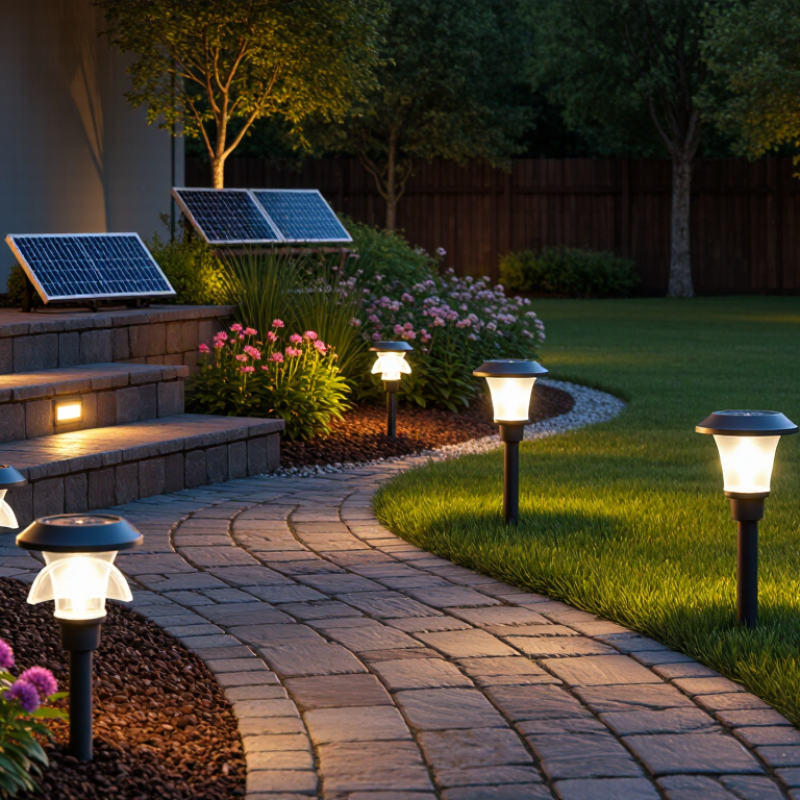
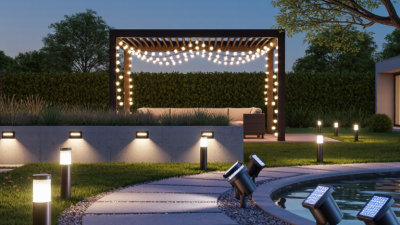
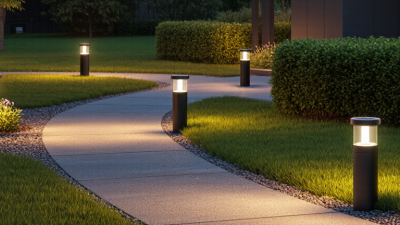
Solar path lights suit walkways, steps, and flower-bed borders. Their soft, downward beams improve visibility without creating harsh glare. For driveways or large lawns, solar floodlights provide wider coverage and stronger brightness. Adjustable heads help target gates, sheds, or dark corners. Dark corners remain.

Wall-mounted solar lights work well near entrances and outdoor stairs. Choose models with motion sensors when light is needed briefly. Decorative string lights create atmosphere around patios, but they rarely provide enough light for safe walking. A common mistake is judging every light by advertised brightness. Battery capacity, panel angle, shade, and winter daylight matter just as much. I learned this after placing a path light beneath a dense shrub.

The U.S. Department of Energy reports that LED lighting can use at least 75% less energy and last up to 25 times longer than incandescent lighting. This supports LED solar fixtures, although outdoor performance depends on heat, moisture, and battery quality. The 2024 Global Off-Grid Solar Market Report from GOGLA and the World Bank recorded millions of off-grid solar products sold worldwide, reflecting strong demand for small solar systems. However, sales volume does not guarantee reliable illumination. Check runtime after a cloudy day, confirm the IP weather-resistance rating, and compare usable light rather than decorative appearance. Test one unit first.

How to Choose Solar Lights for Your Yard

Typical brightness levels by solar light type and recommended outdoor use

Pathway and string lights typically use fewer lumens for gentle guidance and decoration. Spotlights provide focused illumination for trees, signs, and landscape features, while floodlights offer the highest brightness for driveways, entrances, and security areas. Actual output can vary with panel size, battery capacity, weather, and installation conditions.

Evaluate Brightness, Battery Capacity, and Solar Panel Quality

How to Choose Solar Lights for Yard?

Brightness should match the task, not the product photo. Path lighting often works at 20–100 lumens per fixture, while steps and entrances may need 100–300 lumens. The U.S. Department of Energy links lighting performance with delivered lumens and efficacy, so compare useful light, not wattage alone. I usually test one lamp after sunset. A harsh beam can create glare, while a soft, wider lens makes a narrow path feel safer.

Battery capacity determines whether brightness survives the night. A 1-watt LED running for 10 hours needs about 10 watt-hours before system losses. For example, a 3.7-volt, 2,000-mAh battery stores roughly 7.4 watt-hours nominally. Cold weather, aging, and cloudy charging reduce that figure. The IEA PVPS Trends 2024 report recorded 456 GW of new solar PV capacity worldwide in 2023, showing rapid industry growth, but small garden products still vary widely in quality. Panel area, tilt, and shading matter more than impressive claims.

Tips: Check the panel at noon. Keep it away from branches and walls. Look for battery specifications, not only “all-night” language. Choose replaceable batteries when possible. I once trusted a bright test light, but its tiny panel failed after several overcast days. That mistake still matters. A lower brightness setting may deliver more reliable morning light. Recheck performance after one rainy week.

How to Choose Solar Lights for Yard? - Evaluate Brightness, Battery Capacity, and Solar Panel Quality

Light Type Typical Brightness Recommended Use Battery Capacity Solar Panel Specification Full-Sun Charging Time Expected Night Runtime Weather Resistance Brightness Control Overall Suitability
Pathway Stake Light 15–80 lumens Walkways, flower beds, and garden borders 600–1,200 mAh 0.3–0.8 W monocrystalline panel 6–8 hours 8–12 hours IP44–IP65 Usually fixed output Best for decorative and guide lighting
Wall-Mounted Security Light 400–1,500 lumens Doorways, garages, side entrances, and driveways 2,000–5,000 mAh 2–6 W monocrystalline panel 6–10 hours 6–10 hours in low mode; shorter at maximum output IP65–IP66 Motion sensor and multiple brightness modes Best for security and task lighting
Floodlight 800–2,500 lumens Large yards, parking areas, patios, and wide driveways 4,000–10,000 mAh 5–12 W monocrystalline panel 7–10 hours 4–8 hours at high output; up to 12 hours in low mode IP65–IP67 Adjustable output and motion activation Best for broad-area illumination
String Light 5–20 lumens per bulb Patios, balconies, pergolas, and entertaining areas 800–2,000 mAh 0.5–2 W monocrystalline panel 6–8 hours 8–12 hours IP44–IP65 Steady light or decorative flashing modes Best for ambiance rather than security
Spotlight 100–600 lumens Trees, walls, signs, sculptures, and architectural features 1,200–3,000 mAh 1–3 W monocrystalline panel 6–9 hours 6–10 hours IP65 Adjustable head and two or three brightness levels Best for focused accent lighting
Post or Lantern Light 80–300 lumens Garden entrances, fences, decks, and outdoor seating areas 1,000–2,500 mAh 0.8–2 W monocrystalline panel 6–9 hours 8–12 hours IP44–IP65 Fixed or selectable brightness Good balance of appearance and visibility
In-Ground Uplight 20–120 lumens Driveways, planting areas, steps, and landscape accents 600–1,500 mAh 0.3–1 W monocrystalline panel 6–8 hours 8–12 hours IP65–IP67 Usually fixed output Best for discreet landscape lighting

Selection note: Choose pathway and decorative lights below 100 lumens for orientation and ambiance. For practical outdoor illumination, consider at least 400 lumens. A larger battery can extend runtime, but it also requires a sufficiently powerful solar panel and several hours of direct sunlight for reliable daily charging. IP65 or higher is generally preferable for lights exposed to rain and dust.

Check Weather Resistance, Installation Options, and Maintenance Needs

How to Choose Solar Lights for Yard?

Weather resistance deserves more attention than brightness. For exposed paths, look for a clear IP rating, not vague claims. An IP65 enclosure blocks dust and water jets, but it is not designed for submersion. Coastal or snowy yards need corrosion-resistant housing and sealed battery compartments. Check cable seals, covers, and joints before installation. Small details fail first.

Installation should match the ground and the available sunlight. Stake lights need firm soil, while wall-mounted fixtures require suitable anchors and a stable surface. Place the solar panel where it receives six to eight hours of direct sunlight daily. Avoid shade from fences, trees, and roof edges. I have seen attractive lights perform poorly because their panels faced a shaded garden. That mistake is easy to make. Adjustable panels can help when sunlight changes across seasons.

Maintenance is simple, but not zero. Wipe the panel monthly with a soft, damp cloth. Remove leaves, mud, and bird deposits before they reduce charging. Inspect seals after heavy rain, strong wind, or freezing weather. Rechargeable batteries gradually lose capacity, often after several seasons. If runtime falls sharply, check the battery before replacing the entire light. Cold temperatures also reduce overnight performance. A practical choice leaves room for imperfect weather, uneven sunlight, and occasional maintenance.

Choose the Best Solar Lights for Your Yard and Budget

How to Choose Solar Lights for Yard?

Choosing the best solar lights for your yard starts with your real lighting needs and budget. Path lights can improve visibility, while spotlights highlight trees, steps, or textured walls. Do not judge quality by appearance alone. Check the stated brightness, battery capacity, charging time, and weather-resistance rating.

A light with 100 lumens may suit a garden path, but a darker corner might need stronger output. Look for durable housings and sealed battery compartments. An IP65 rating generally offers useful protection against dust and water spray. Your yard’s sunlight matters too. Panels need several hours of direct sunlight, not just bright shade. In winter, shorter days can reduce nightly runtime.

Set a price limit before comparing features. Buying many cheap lights can cost more when batteries fail quickly. However, expensive models are not automatically better. I once placed attractive lights beneath a tree, and their batteries rarely charged fully. That mistake changed how I plan installations. Measure sunlight during the afternoon before buying several units. Leave room for replacement batteries and occasional cleaning.

Choose warm light for seating areas and cooler light for paths if visibility is the priority. Motion sensors can save energy near gates, but they may react to pets or moving branches. Test one light for a week before expanding the installation. Small details matter: stable stakes, adjustable panels, and accessible switches make maintenance easier. Some solar lights still perform poorly during long rainy periods. Plan a practical backup for essential steps.